




A client consulted Mr. Zhang, a senior technical engineer, about a persistent issue: the connecting bolts between the hollow shaft and cylinder at the feed end of their tube mill kept breaking. As time went by, the number of fractured bolts increased, and the problem occurred more frequently. An inspection of the bolt holes revealed that they had become misaligned.
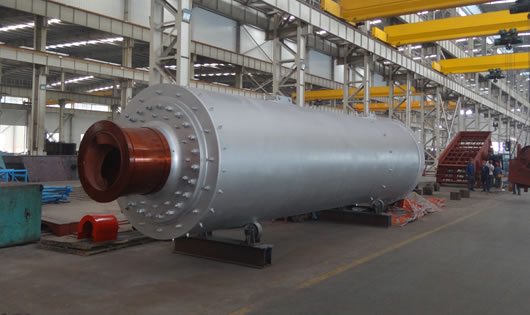
Based on the client's description, Mr. Zhang conducted a thorough analysis and identified the following key causes of the bolt fracture problem:
1.Insufficient or uneven preload during installation
The preload force applied to the bolts was either too low or inconsistently distributed at the time of assembly.
2.Loosening due to thermal expansion
After the mill is put into operation, the internal temperature rise causes the bolts to elongate within their elastic range. Failure to re-tighten the bolts promptly will lead to loosening and subsequent fracture.
3.Shear risk from powder intrusion
When a bolt loosens or breaks and is positioned directly below the flange, it bears maximum tensile force. This creates gaps between the hollow shaft flange and the cylinder flange, allowing fine powder to infiltrate the contact surfaces and significantly increasing the risk of bolt shearing.
4.Alternating stress-induced cascading fracture
As the mill cylinder rotates, the failed bolt shifts to the upper position and experiences reversed stress. Under the effect of continuous alternating stress, the bolt fractures completely. This issue further elevates the risk of adjacent bolt failure, resulting in increasingly frequent fracture incidents.
5.Misalignment and bearing damage
Once bolts break, the hollow shaft deviates from the mill's centerline, causing vibration during operation. This vibration ultimately leads to damage of the mill bearing pads.
To resolve the above problems, Mr. Zhang recommended implementing the following targeted solutions:
1.Disassemble, clean and realign flanges
Fully disconnect the hollow shaft from the cylinder flange. Thoroughly clean and grind away dust, burrs and debris on the contact surfaces, then reassemble and precisely align the components.
2.Replace and ream reamed hole bolts
Install all standard connecting bolts and apply preload. For reamed hole bolts, ream the holes to the required dimensions and install new bolts that match the reamed size exactly.
3.Rescrape and lap spherical bearings
Perform scraping and lapping on spherical bearing pads according to their actual contact surface conditions to ensure optimal fit.
4.Apply uniform preload with hydraulic wrenches
Use hydraulic wrenches to apply preload uniformly to all bolts, with the preload force set to 85% of the bolts' yield strength.
5.Re-tighten bolts after initial operation
Shut down the mill 8 hours after its initial startup and re-tighten all bolts to maintain the required preload.
Conclusion
As a leading provider of cement engineering, industrial machinery and spare parts, CCSP boasts rich experience in solving complex operational challenges for cement production equipment. Our team of expert engineers delivers customized technical support, high-quality replacement parts and on-site service to optimize the performance and durability of your tube mill systems.