




A customer once shared with us that their company’s rotary kiln had been in operation for many years. They frequently experienced increased viscosity and darkening of the lubricant, resulting in high replacement costs.
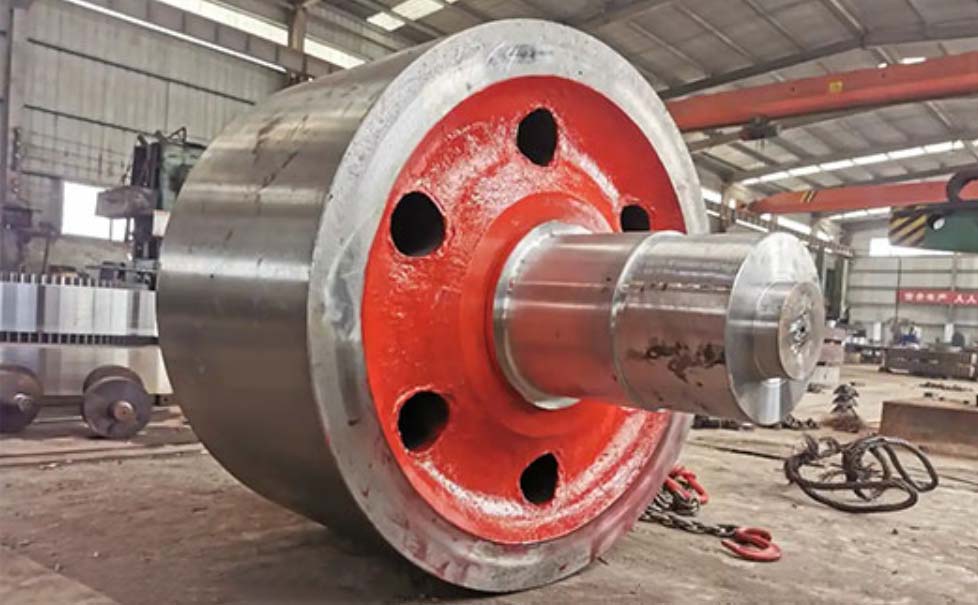
Engineer Mr. Zhang explained that many plants habitually use Grade 680 gear oil or asphalt-based cylinder oil for rotary kiln support roller bearings. Among these, Grade 680 gear oil has poor extreme-pressure resistance and is highly prone to oxidation and deterioration. When there is leakage or water ingress, it emulsifies easily, making it difficult to form a proper lubricating film on the bearing surface. Under normal conditions, Grade 680 gear oil shows signs of emulsification in about three months, requiring immediate replacement.
Cylinder oil, on the other hand, offers poor adhesion and viscosity, making it difficult to apply in winter. The oil scooper often fails to pick up enough oil, leading to high starting and running currents, as well as accelerated bearing wear and scoring.
In response to these issues, switching to HF-type roller oil can significantly improve performance:
-
Maximum non-seizure load (PB value): increases from 640N to 1,250N
-
Friction coefficient at corresponding PB value: decreases from 0.086 to 0.056
-
Sintering load (PD value): increases from 4,200N to over 8,000N
Taking a 4m-diameter kiln as an example, the annual lubricant consumption can be reduced from 6.5 tons to just 1.2 tons.
Key steps when switching to HF-type roller oil:
-
Thoroughly clean the original oil from the system using diesel.
-
Rinse once with a thin lubricating oil.
-
Add the HF-type roller oil.
After a three-day running-in period, the bearing temperature drops. When touching the shaft surface by hand, it no longer feels rough or prickly as before the oil change. After about half a month, a greyish-yellow lubricating film forms on the shaft surface. The grey layer is a chemical reaction film formed by extreme-pressure anti-wear additives under high temperature and pressure, while the light-yellow layer is the original physical lubricating film. The synergy between these two films ensures superior overall lubrication performance.